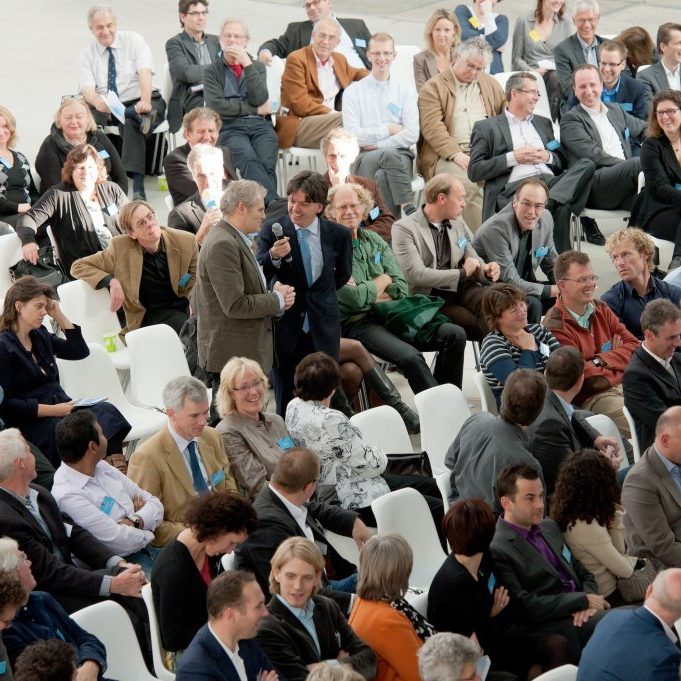

Energy is often seen as something external, something participants either bring with them or do not. In reality, energy is shaped continuously throughout a meeting. By pace, variation, attention, and timing. Energy management is not about working harder or doing more, but about choosing the right moment.
Rhythm as the underlying structure
Every meeting has a rhythm, even when it is not intentionally designed. That rhythm emerges from the sequence of elements, the length of contributions, the alternation between listening and doing, and the moments of rest.
When everything moves at the same pace, energy fades. Not because the content lacks quality, but because there is no natural movement. Rhythm requires contrast. Speeding up and slowing down. Focus and release. Action and reflection. By designing this rhythm consciously, you guide the energy instead of reacting to it.
Energy follows attention
Energy and attention are inseparable. Where attention goes, energy follows naturally. Long monologues drain attention. Interaction restores it. At the same time, too many stimuli can fragment attention.
Energy management therefore means making choices. Not everything needs the same weight. By alternating moments of emphasis with moments of rest, attention remains sharp. This requires the courage to shorten, to let go, and sometimes to do nothing at all. A strong rhythm does not feel busy, but clear.
The trap of keeping energy constantly high
A common misconception is that energy must always be high. That a good meeting is dynamic, active, and continuously engaging. In practice, this often leads to exhaustion.
Energy comes in different forms. Focus, curiosity, stillness, engagement. A quiet moment can be just as energetic as an interactive exercise. The difference lies not in volume, but in quality.
By allowing lower-energy moments, balance emerges. And that balance makes the peaks more effective.
Transitions make the difference
Energy rarely drops during content itself, but during transitions. When one segment ends and the next begins without closure or context, the group loses the rhythm.
Clear transitions help maintain energy. By briefly acknowledging what has happened and what is coming next, you guide participants smoothly. The rhythm remains tangible and attention shifts with intention. Breaks are part of these transitions as well. Not as interruptions, but as integral elements of the meeting flow.